Wildlife Tracking Helicopter Services for Conservation Work
KiliFlying Air delivers specialized wildlife tracking helicopter services for conservation work across Tanzania and East Africa, providing essential aerial support for radio collaring operations, anti-poaching patrols, population surveys, species translocation, and behavioral studies that protect endangered animals and inform management decisions in critical ecosystems.
Wildlife Tracking Helicopter Services for Conservation Work
Effective wildlife conservation relies on accurate, timely information about animal movements, population health, and threats. Ground tracking is limited by terrain, vegetation, and vast protected areas spanning thousands of square kilometers. Helicopters provide the mobility, elevation, and endurance needed to locate, monitor, and protect wildlife efficiently while minimizing disturbance. KiliFlying Air has decades of experience supporting conservation organizations, national parks authorities, research institutions, and anti-poaching units with professional aerial tracking services that contribute directly to species survival.
Our wildlife tracking operations prioritize animal welfare with quiet flight profiles, experienced pilots trained in low-impact techniques, and strict adherence to park regulations. We enable conservation teams to gather critical data and respond rapidly to threats, helping secure the future of East Africa's iconic species in an era of increasing pressure.
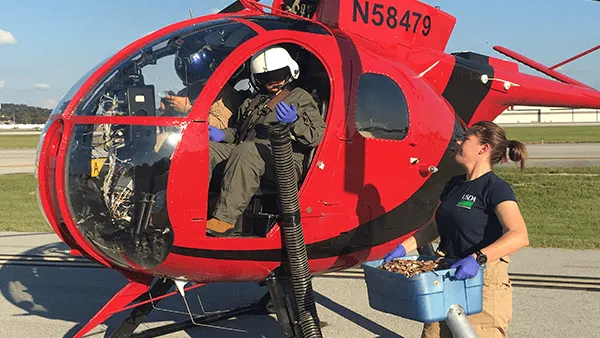
Radio Collaring & Telemetry Tracking
Radio and GPS collaring provides essential movement data for understanding ranging patterns, migration routes, and human-wildlife conflict hotspots. Helicopters locate target animals across vast territories, transport veterinary darting teams, and support safe immobilization procedures.
Post-collaring verification flights confirm device functionality and animal recovery while initial tracking flights establish baseline movement patterns. Long-term monitoring programs benefit from regular telemetry flights that download collar data or visually confirm animal condition, supporting studies on elephants in Tarangire, lions in the Serengeti, and wild dogs across multiple ecosystems.
Anti-Poaching Patrols & Rapid Response
Poaching remains the greatest immediate threat to elephants, rhinos, and other high-value species. Aerial patrols provide persistent overwatch across large concessions, detecting intruder activity and directing ranger teams to interception points quickly.
Thermal imaging enables night operations against sophisticated poaching networks, while rapid response capability deploys armed units within minutes of sighting threats. Regular patrol patterns deter illegal activity while documenting evidence for prosecutions, significantly reducing poaching incidents in partnered conservancies.
Population Surveys & Census Support
Accurate population estimates guide conservation priorities and measure program success. Systematic aerial surveys count large herbivores across entire ecosystems where ground counts are impossible, providing statistically robust data for management decisions.
Standardized methodologies with distance sampling produce reliable abundance estimates for elephants, giraffes, buffalo, and zebras. Targeted surveys focus on endangered species like black rhinos or Grevy's zebras, combining visual counts with individual recognition photography for mark-recapture analysis.
Species Translocation & Reintroduction
Restoring populations to historic ranges requires careful translocation of founder animals. Helicopters transport crated rhinos, elephants, or predators to release sites with minimal stress, often netting animals from the air when necessary.
Post-release monitoring tracks adaptation and dispersal while rapid intervention capability addresses any health issues during critical establishment periods. Successful translocations supported include black rhino reintroductions to Serengeti and wild dog releases in multiple reserves.
Behavioral & Ecological Research Support
Understanding animal behavior informs conservation strategies. Helicopters locate radio-collared study animals for ground researcher deployment, enabling direct observation without prolonged searching.
Aerial observation platforms support studies on predator-prey dynamics, social structure, and habitat selection with minimal disturbance. Long-term projects benefit from consistent aerial access that maintains research continuity across seasons and years.
Technical Capabilities & Conservation Tools
Our wildlife tracking helicopters feature specialized equipment:
- Telemetry receivers for VHF/GPS collar tracking
- Thermal/FLIR imaging for night location
- High-zoom optics for individual identification
- Net gun capability for safe capture
- Veterinary darting support configuration
- Quiet flight profiles minimizing disturbance
- Extended endurance for large-area searches
Pilots and crew receive regular training in conservation aviation and animal behavior awareness.
Frequently Asked Questions
Wildlife tracking helicopter services from KiliFlying Air directly contribute to species protection and ecosystem preservation. Partner with us to advance conservation outcomes. Explore our Environmental Monitoring and Aerial Survey for complementary capabilities.